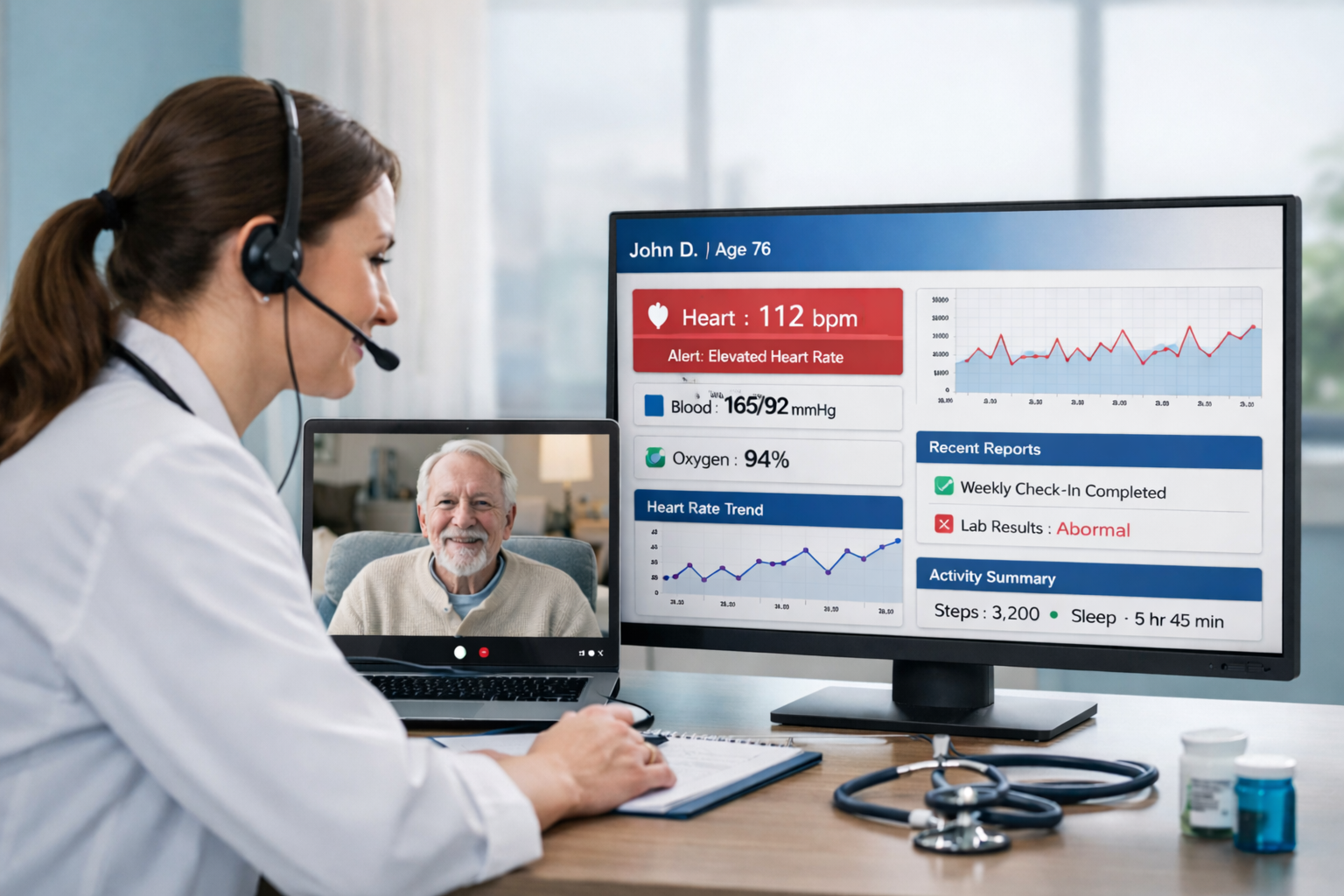
Keep patients connected, engaged, and managed across their entire care journey.
Focus on what truly drives your practice, better outcomes, value-based readiness, and predictable recurring revenue. With the right team, technology, and expertise, your APCM program can deliver scalable, compliant, and high-impact care.
A complete solution for APCM success
Advanced Primary Care Management (APCM) is a CMS-aligned care model that enables physician groups to deliver continuous, longitudinal care beyond traditional visits, while generating recurring monthly reimbursement.
APCM works by combining care coordination, preventive care, and ongoing patient engagement into a structured program that supports patients across their entire care journey without requiring face-to-face visits for every interaction.
With Circle Health, you can operationalize APCM through:
Patient identification and enrollment
Continuous care coordination and engagement
Structured documentation and CMS-aligned billing
Deliver continuous, whole-person care while unlocking monthly CMS-aligned reimbursement. APCM enables physician groups to move beyond episodic visits and build longitudinal, relationship-driven care models.
Whether you're transitioning to value-based care or expanding existing programs like CCM and RPM, Circle Health helps you streamline operations, ensure compliance, and maximize revenue potential.
Everything you need for APCM Success
Billing & Codes
Capture and document non-face-to-face care activities aligned with CMS guidelines to support accurate, recurring reimbursement.
EHR Integrations
Integrate with your EHR to streamline patient identification, enrollment, care coordination, and secure messaging.
Security & Compliance
HIPAA-compliant infrastructure with secure data exchange, audit-ready documentation, and role-based access controls.
APCM is billed using the following CMS codes (monthly, per patient):
These codes can be billed once per patient per month, creating a predictable and scalable revenue stream for physician groups.
G0556
Low Complexity Patients
For patients with ≤1 chronic condition.
~$15–$25
per patient / month
Most CommonG0557
Moderate Complexity
For patients with 2+ chronic conditions.
~$50–$60
per patient / month
G0558
High Complexity / Dual Eligible
For patients with 2+ chronic conditions and Qualified Medicare Beneficiary (QMB) status.
~$90–$110
per patient / month
Platform Highlights
AI-powered value-based care programs
Identify and enroll eligible patients effortlessly
Leverage intelligent workflows to identify patients eligible for APCM based on risk, utilization, and care needs. Integrate with EHR data to streamline enrollment and onboarding.
Stay compliant with CMS guidelines
Automated workflows ensure proper documentation, consent management, and adherence to CMS requirements, keeping your APCM program audit-ready at all times.
Deliver personalized, longitudinal care plans
Create and manage dynamic care plans tailored to each patient's medical history, risk profile, and evolving needs supporting continuous engagement beyond visits.
Turn data into proactive care interventions
Use AI-driven insights to identify care gaps, predict risks, and guide timely interventions improving outcomes and reducing avoidable utilization.
Transform care coordination into recurring revenue
APCM enables reimbursement for ongoing care management activities performed outside traditional visits, creating predictable monthly revenue streams aligned with value-based care.
Simplify your care management revenue cycle
Track all patient interactions, care coordination efforts, and engagement activities in one system, ready for accurate reporting and streamlined billing.
See APCM in Action
Understand how APCM works, including care delivery workflows, billing codes, and revenue potential for physician groups.
APCM Reimbursement Framework
Understanding value-based reimbursement for APCM
APCM aligns with CMS's broader shift toward value-based, longitudinal care models, enabling physician groups to:
→Generate monthly recurring revenue (PMPM models) Typical reimbursement ranges from $15 to $110 per patient/month, depending on patient complexity and eligibility.
→Improve quality performance metrics (MIPS, ACOs)
→Reduce total cost of care through proactive management
For physician groups, this translates into:
→$150K–$500K+ annual revenue potential (based on panel size and mix)
→Predictable, scalable income tied to patient engagement not visit volume
Unlike standalone programs, APCM integrates multiple care management services into a comprehensive, scalable reimbursement model.
$15 – $110
Per patient / month reimbursement depending on complexity (G0556 → G0558)
$150K – $500K+
Annual revenue potential based on panel size and patient mix
1×
Billed once per patient per month predictable, scalable, and tied to engagement not visit volume
Frequently Asked Questions
APCM enables physician groups to transition toward value-based care by delivering continuous, coordinated care that improves outcomes while generating recurring revenue from non-visit-based services.
APCM supports proactive, longitudinal care through regular engagement, care coordination, and personalized care plans helping reduce hospitalizations and improve adherence.
APCM is ideal for Medicare and high-risk patient populations who benefit from continuous care management, preventive care, and coordinated interventions.
While CCM focuses on chronic conditions and RPM on device-based monitoring, APCM provides a holistic, longitudinal care model that integrates both and expands across the full patient journey.
Yes. Circle Health ensures all APCM workflows, documentation, and reporting align with CMS guidelines, maintaining full compliance and audit readiness.
Ready to transform your primary care model?
Let's design an APCM program that improves outcomes, strengthens patient relationships, and drives sustainable revenue growth.